


- Category
- Hot products
.jpg)
-
Core Characteristics And Applicable Scenarios Of Mainstream Valves
-
To do a good job in valve selection, it is necessary to thoroughly understand the core characteristics of mainstream valves such as gate valves, ball valves, butterfly valves, globe valves, check valves, and safety valves, and then make basic judgments based on working conditions to avoid blind selection.
Gate Valve: A low-resistance, high-flow "isolation" valves
The core advantage of gate valves is that the pressure loss is extremely low when fully opened, and the medium can pass through the valve body in a straight line with almost no additional resistance, making it very suitable for high flow conveying scenarios.
Its switch is a multi turn linear motion with slow speed, making it more suitable for long-term open and occasional operation conditions, such as municipal water supply pipelines and crude oil long-distance pipelines.
When selecting, it should be noted that gate valves are not suitable for high-frequency switches or throttling regulation. Priority should be given to scenarios where the medium is liquid such as clean water or crude oil, and is sensitive to pressure loss.
Ball Valve: Fast-switch, high-sealing "control" valves
Ball valves are 90° angle-stroke valves, offering fast switching speeds and outstanding sealing performance, achieving near-zero leakage. They are suitable for gaseous media and liquids with high sealing requirements.
They also support multi-bore designs (tees, fours), enabling flow diversion, merging, or flow direction switching, and are widely used in industries such as chemical and gas.
When selecting ball valves, note that they are more expensive for large-diameter applications and are better suited for small to medium diameters, high-frequency switching, or applications requiring precise sealing, such as natural gas pipelines and automated production lines.
Butterfly Valve: A compact, lightweight, and cost-effective "universal" valve with a large diameter
Butterfly valves have a compact structure and light weight, with a much smaller body area than gate valves and ball valves of the same diameter. They occupy less installation space and have a significant cost-effectiveness advantage when using large diameters.
It is also a 90°quick open, easy to operate, suitable for high flow and space limited working conditions, such as HVAC and municipal sewage main.
When selecting a butterfly valve, note that standard center-type butterfly valves are more suitable for low-pressure applications, while eccentric butterfly valves are preferred for medium to high-pressure scenarios to ensure sealing and pressure resistance.
Globe Valve: A precise, reliable flow-regulating valves
The globe valve's disc moves along the centerline of the valve seat, enabling precise flow regulation. Its throttling performance is superior to gate valves and ball valves, making it suitable for applications requiring fine flow control, such as chemical process pipelines and boiler feedwater regulation.
Its sealing performance is good, effectively preventing backflow when closed, but it experiences significant pressure loss when fully open, making it unsuitable for high-flow-rate applications.
When selecting a globe valve, note that it is more suitable for small to medium diameter applications requiring frequent throttling, primarily for media such as clean water, steam, and chemical reagents.
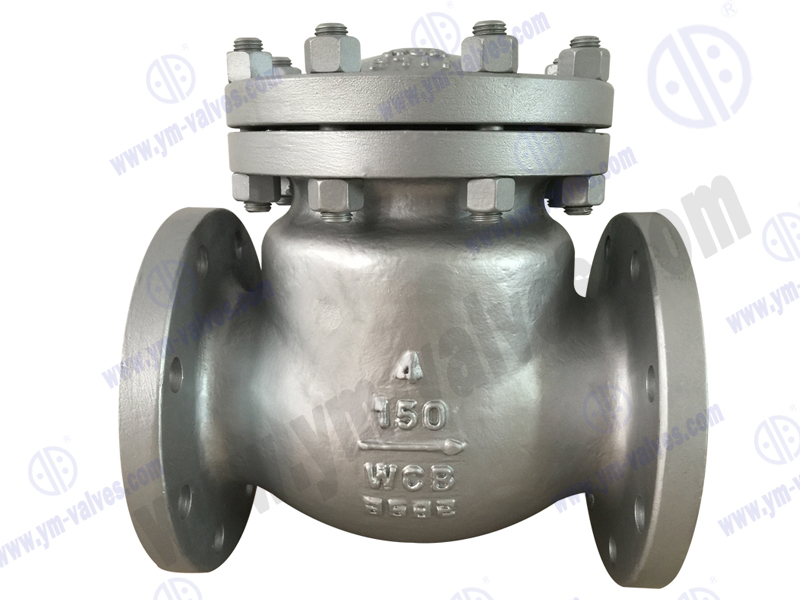
Check Valve: A one-way valve that prevents backflow and protects equipment
The core function of a check valve is to prevent backflow of the medium, protecting critical equipment such as pumps and compressors from backflow impact. It is commonly found at pump outlets and in gas pipelines.
Its structure is simple; it automatically opens or closes based on the direction of medium flow, requiring no manual operation.
When selecting a check valve, pay attention to choosing the appropriate structural form (such as swing or lift type) based on the medium flow rate and pipeline layout to avoid backflow caused by insufficient valve closure due to low medium flow rate.
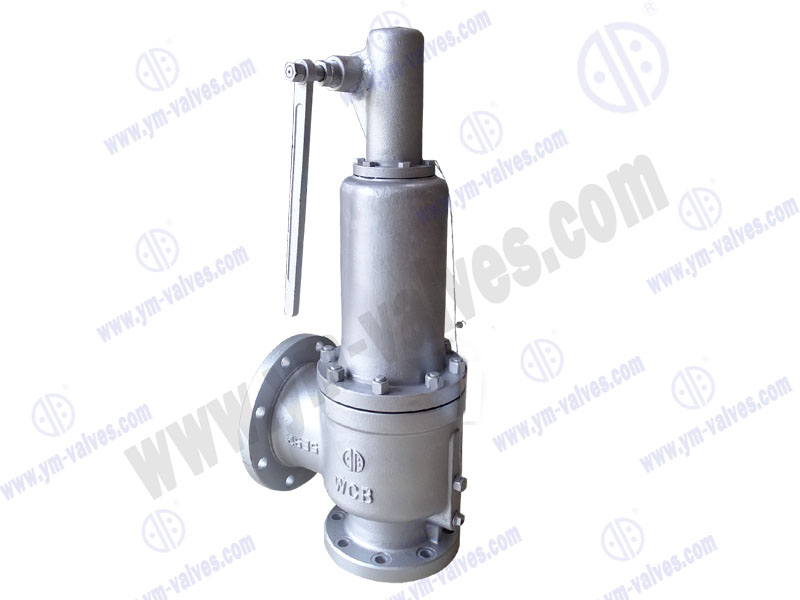
Safety Valve: A "relief type" valve that provides overpressure protection and ensures safety
Safety valves are the "safety guards" of pipeline systems. When the system pressure exceeds the set value, they will automatically open to release pressure, preventing equipment damage or explosion caused by excessive pressure. They are commonly used in pressure vessels, boilers, high-pressure pipelines, and other scenarios.
Its opening pressure and pressure relief capability need to strictly match the safety requirements of the system, and the selection must comply with relevant specifications.
When selecting, attention should be paid to selecting appropriate materials and structures based on the properties of the medium, working pressure, and temperature, to ensure timely and reliable pressure relief in case of overpressure.