


- Category
- Hot products
.jpg)
-
Check Valve Installation Guide: Direction, Types & Mistakes
-
In industrial piping systems, a check valve plays a critical role in preventing backflow, protecting pumps, compressors, and pipelines from reverse pressure damage. However, even the highest-quality check valve can fail if installed incorrectly. Understanding the correct installation direction is essential for ensuring system safety, efficiency, and long-term valve performance.
This article explains the correct installation direction for different types of check valves and highlights the most important installation principles for industrial applications.
Core Principle: Flow Direction Must Match the Arrow Mark
The most important rule when installing a check valve is simple:
The fluid flow direction must always match the arrow marked on the valve body.
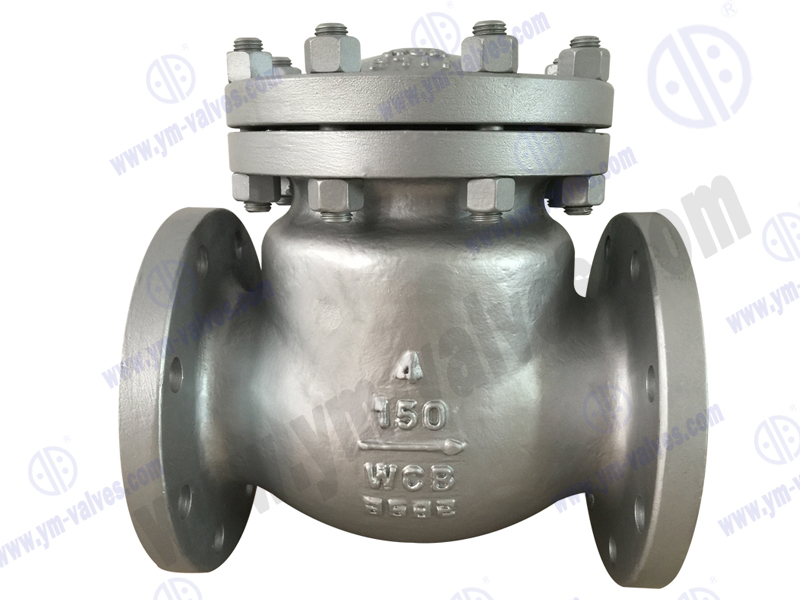
Almost all industrial check valves are manufactured with a directional arrow cast or painted on the body.
During installation:
1)Fluid should enter from the tail side of the arrow
2)Fluid should exit from the arrowhead direction
Incorrect installation can lead to:
1)Valve failure
2)Reverse flow
3)Pump damage
4)Water hammer
5)Pipeline blockage
6)Reduced sealing performance
Different check valve designs have specific installation requirements. Choosing the correct orientation is essential for reliable operation.
1. Swing Check Valve Installation
A swing check valve operates through a disc that rotates around a hinge pin.
Horizontal Pipeline Installation
For horizontal pipelines:
1)The hinge pin should remain horizontal
2)The disc must swing freely without obstruction
2. Vertical Pipeline Installation
Some swing check valves can be installed vertically, but only when: the medium flows upward from bottom to top
This upward flow pushes the disc open properly.
If installed with downward flow:
1)Gravity prevents the disc from opening
2)The pipeline may become blocked
3)Backflow protection becomes ineffective
3. Lift Check Valve Installation
Lift check valves, also known as silent check valves, operate through a vertically moving disc.
Installation Requirements:
1)Must be installed on horizontal pipelines
2)The disc movement direction must remain vertical
Correct Flow Direction:
1)Fluid enters from below
2)The disc lifts upward
3)Fluid exits from above
If installed in reverse:
1)The disc will be forced tightly against the valve seat
2)The valve cannot open
3)Flow will be completely blocked
4. Butterfly Check Valve Installation
Butterfly check valves use dual semi-circular discs rotating around a central shaft.
Installation Features
Suitable for:
1)Horizontal pipelines
2)Vertical pipelines
Vertical Installation Notes
When installed vertically:
1)Flow must move upward
2)Upward pressure opens the discs correctly
The arrow on the valve body must always match the actual media flow direction.
5. Wafer Check Valve Installation
Wafer check valves feature a compact structure installed between pipeline flanges.
Installation Requirements:
1)Install between two pipe flanges
2)Follow the flow arrow on the valve body
Important Notes
Spring-assisted wafer check valves: can usually be installed horizontally or vertically
Non-spring wafer check valves:
1)Require careful orientation verification
2)Incorrect positioning may prevent proper disc reset due to gravity
Common Installation Mistake in Vertical Pipelines
One of the most common installation errors occurs when check valves are installed in vertical pipelines.
Correct Installation
1)Flow direction: bottom to top
2)Arrow direction: upward
3)Disc opens properly under fluid pressure
4)Valve closes automatically when flow stops
Incorrect Installation
1)Flow direction: top to bottom
2)Arrow direction: downward
3)Disc remains pressed against the seat
4)Pipeline flow may become blocked
5)Reverse flow protection fails
Proper installation directly affects valve lifespan, pipeline safety, and equipment protection.
Easy-to-Remember Installation Rules
To simplify check valve installation, remember these four essential rules:
1)Arrow follows flow direction
2)Foot valves install upward
3)Horizontal pipelines require free disc movement
4)Vertical pipelines require upward flow
Following these rules helps ensure:
1)Stable pipeline operation
2)Reduced maintenance costs
3)Longer valve service life
4)Improved system safety
Conclusion
Correct check valve installation is critical for maintaining safe and efficient industrial pipeline systems. Whether using swing check valves, lift check valves, butterfly check valves, wafer check valves, or foot valves, proper flow direction and installation orientation directly determine valve performance.
Before installation:
1)Always check the valve body arrow
2)Confirm pipeline flow direction
3)Verify vertical or horizontal installation requirements
4)Follow manufacturer specifications carefully
Properly installed check valves provide reliable backflow prevention, protect equipment, and improve the overall stability of industrial systems.